
Web-forensics use case
Capture and preserve social media evidence
Social media evidence acquisition preserves relevant posts, profiles, comments, media, and surrounding context in a documented session. A strong workflow records what was visible, where it appeared, how the investigator reached it, and how the resulting files can be checked later.
What this use case means
Social media evidence acquisition preserves relevant posts, profiles, comments, media, and surrounding context in a documented session. A strong workflow records what was visible, where it appeared, how the investigator reached it, and how the resulting files can be checked later.
Social content changes quickly and is often loaded dynamically. Posts may be edited or deleted, comments can be collapsed, feeds are personalized, and account or platform restrictions can affect what an investigator sees. Capturing only one screen can separate a statement from its author, thread, date, URL, or surrounding conversation.
Common situations
When this workflow is useful
- Preserving public posts, comments, replies, profiles, and media relevant to a case
- Documenting harassment, threats, impersonation, fraud, or coordinated activity
- Collecting social findings for legal, OSINT, brand-protection, or internal investigations
Recommended process
A documented acquisition workflow
- Identify the target precisely
Record the platform, profile identifiers, URLs, date range, relevant accounts, and the specific content or interaction that must be preserved.
- Document access conditions
Note whether the material is public, authenticated, personalized, geographically restricted, or presented through an algorithmic feed.
- Capture the thread and context
Preserve the relevant post together with author information, dates, surrounding conversation, expanded comments, media, and navigation context where appropriate.
- Record technical and integrity data
Retain available source information, acquisition logs, hashes, and trustworthy time records for the collected artifacts.
- Report limitations
State what was expanded, what was unavailable, whether the platform changed during collection, and which elements were outside scope.
Reviewable output
What the evidence package should explain
Post and profile context
Visible names, identifiers, URLs, dates, text, and surrounding page context can help explain attribution.
Conversation record
Long-page capture, auto-scroll, and comment expansion can preserve relevant threads more completely.
Media and session context
Screenshots, video, downloads, and session records document relevant visual and interactive material.
Integrity and custody
Hashes, timestamps, activity logs, case organization, and reporting support later verification.
The exact artifacts depend on the source, plan, configuration, authority, and investigation. A report should identify what was and was not collected.
Eviquire in use
See the workflow in the product.
These screenshots show a demonstration environment. Actual results depend on the platform, access conditions, selected workflow, configuration, and authority.
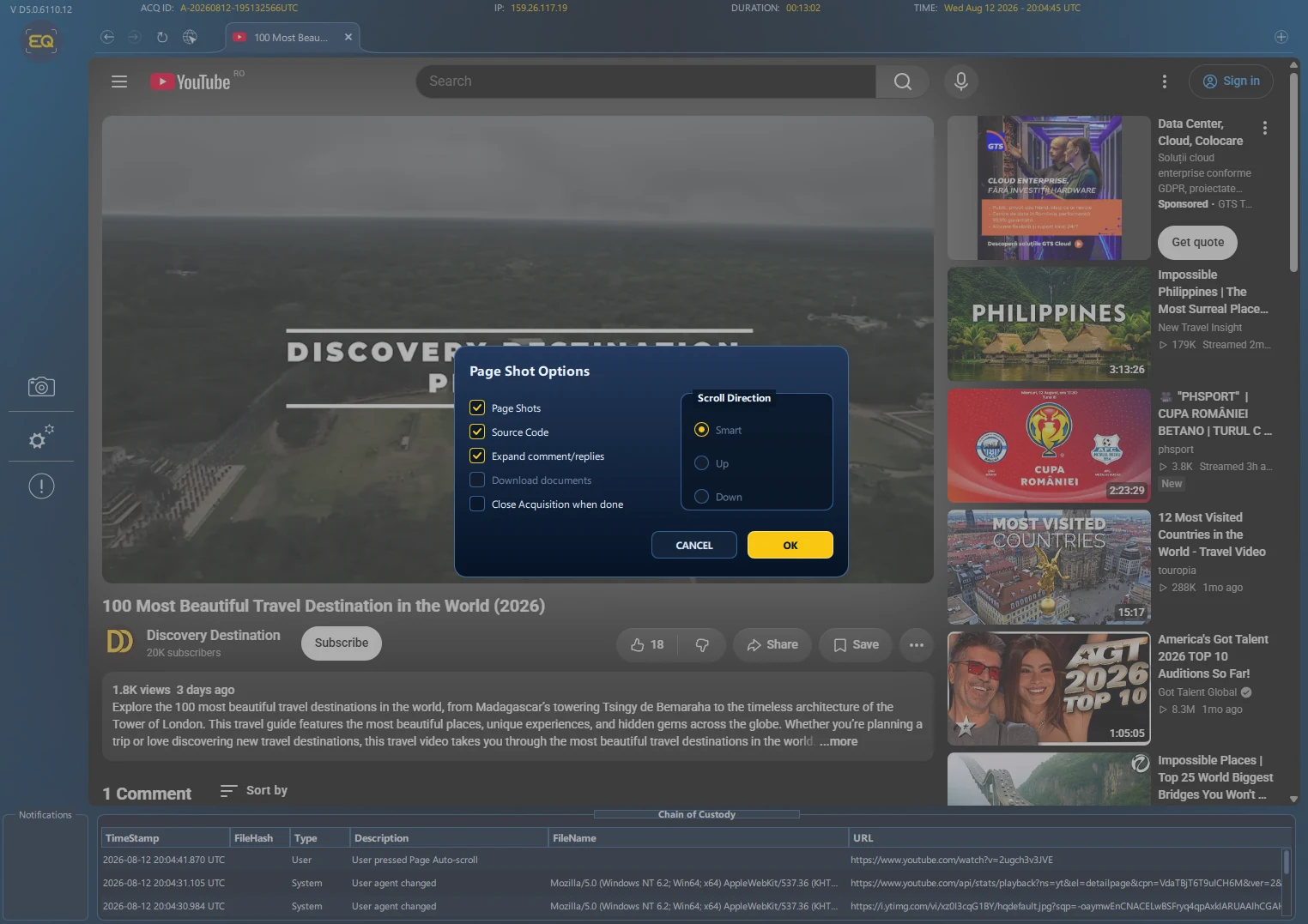
Expand relevant conversations
Use scrolling and comment/reply expansion where the source and workflow permit it, so a reviewer can see the relevant post in its conversation context.
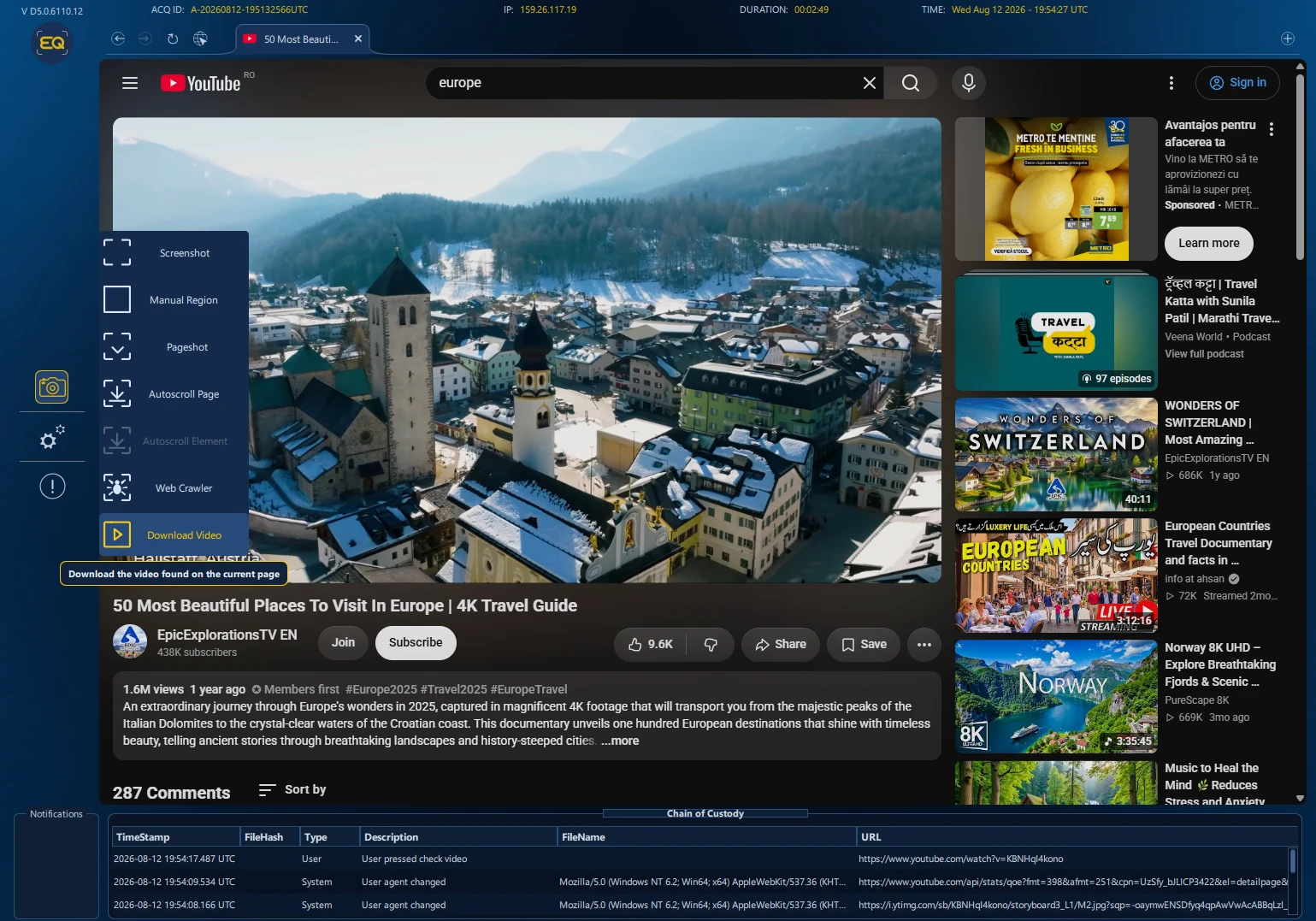
Preserve media in context
Record the post or player page, visible account context, comments, and available media artifacts rather than separating media from its source.
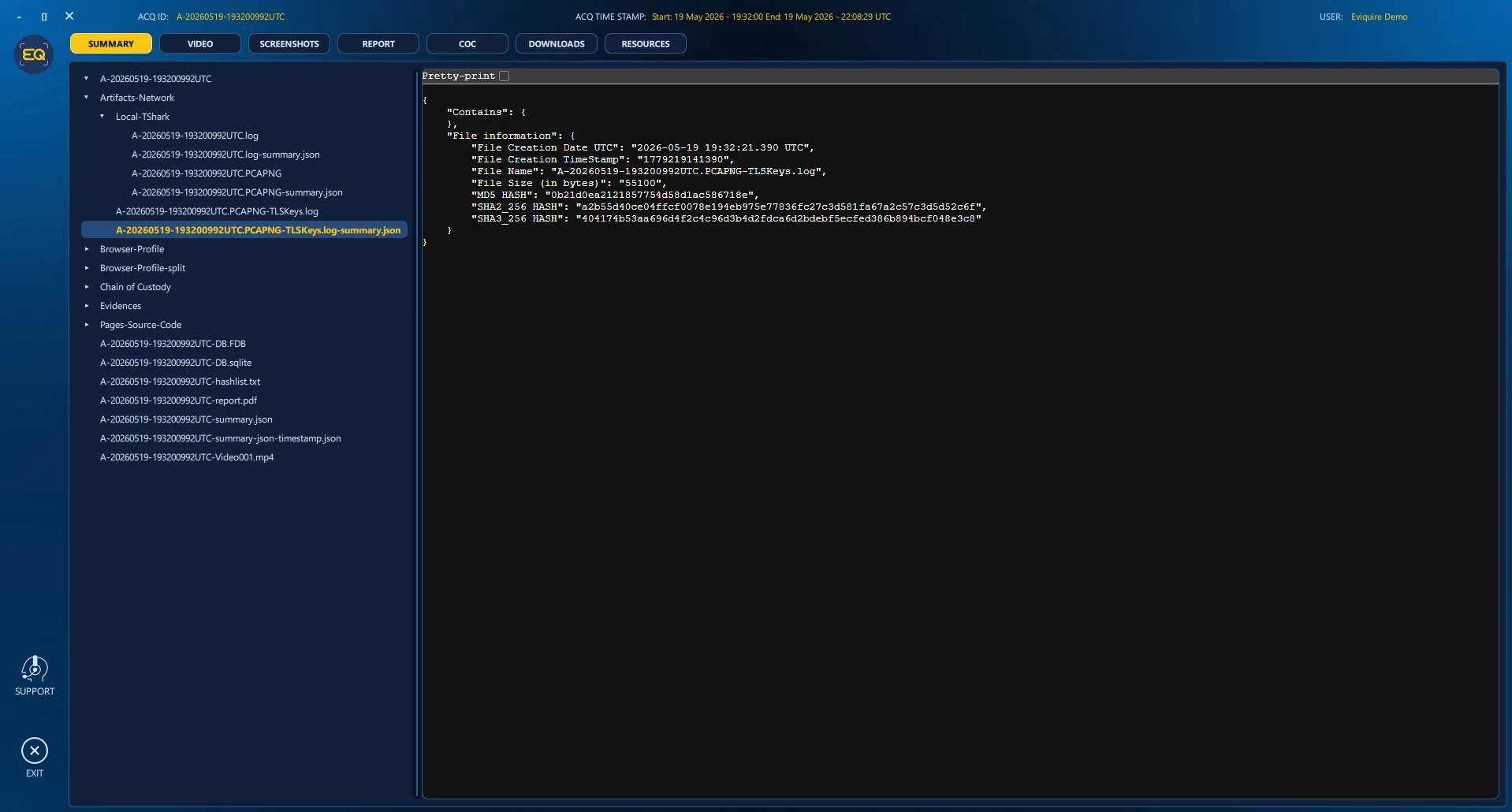
Review the resulting artifacts
Use case review to keep screenshots, source material, activity records, and supporting package details connected.
Professional considerations
Authority, proportionality, and limitations
- Respect platform terms, privacy expectations, legal authority, and restrictions on accessing private or protected accounts.
- A displayed profile name is not conclusive proof of the person controlling an account; attribution normally requires corroborating evidence.
- Personalized feeds and changing comment order mean another user may not see the same presentation later. Record these conditions explicitly.
Important: Eviquire supports a documented technical process. It does not establish identity, truth, culpability, infringement, or admissibility, and it does not replace legal advice or a validated organizational procedure.
Standards and primary guidance
Online evidence procedures should be validated for the organization and matter. Useful starting points include SWGDE guidance for acquiring online content, ISO/IEC 27037:2012, and NIST digital-evidence resources.
Frequently asked questions
Can deleted social media posts still be captured?
A post must normally be accessible during acquisition unless it exists in another lawful source or prior record. Collection should begin promptly when volatile content matters.
Can comments and replies be preserved?
Relevant visible comments and replies can be documented, including expanded or dynamically loaded material where the platform and workflow permit it.
Does a social media capture prove account ownership?
No. It documents what the platform presented during collection. Account attribution should be supported by additional records and analysis.
What if a feed changes while it is being captured?
Record the change, time, collection sequence, and any affected artifacts. The report should describe the limits rather than treating the feed as a fixed document.
Who uses this workflow?
Relevant professional roles
This acquisition workflow is commonly relevant to these teams. The appropriate authority, scope, procedure, and review requirements still depend on the matter.

Forensic experts
Acquire online evidence with technical context, integrity verification, custody records, and reporting.
See role-specific guidance →
Law enforcement
Preserve volatile online evidence for authorized criminal and intelligence investigations.
See role-specific guidance →
Law firms
Preserve websites and online content for litigation, disclosure, legal holds, and expert review.
See role-specific guidance →
Private investigators
Turn online findings into organized, verifiable evidence and professional client reports.
See role-specific guidance →